Wednesday, July 23, 2008

Who is Mr. Darcy?

I have never read the actual book, but I am confident that many will agree when I say that Jane Austen's Pride and Prejudice, is one of the most romantic stories ever told.


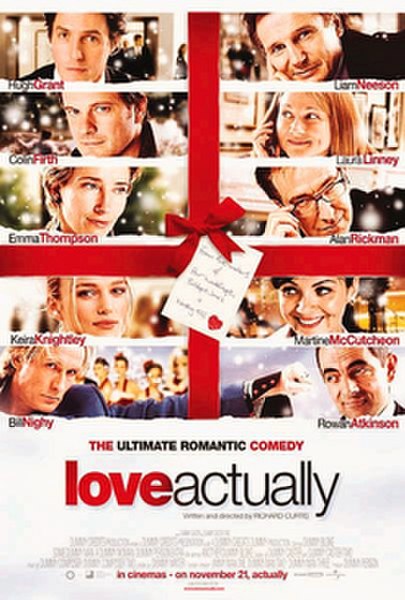
Keira Knightly's portrayal of Elizabeth Bennet was flawlessly alluring while Matthew McFayden remained charmingly aloof in his take of the famous Mr. Darcy.


The first time I ever saw this film, I slept right through the second half (granted, I was sorely lacking sleep from having cared for my sick dog the night before) probably because of the way the dialogue went around in the movie, since it required the artists to speak in the way people spoke during the late 1700's; which was slow, refined and almost emotionless---almost. I watched it again at the urging of a close friend and surprise, surprise; the conversations which I missed were actually bursting with emotions of love, passion, regret, sorrow, indignation...you get the picture.


Don't get me wrong, I really wanted to read the book but I just haven't found the time to scout for a copy of it. Luckily, a friend lent me a self-published book entitled "Darcy's Passions" by Regina Jeffers, which is still Pride and Prejudice, but told in the perspective of Mr. Darcy.


As I was reading the book, I couldn't help but mentally picture Knightly and McFayden in their respective roles because Jeffers managed to consistently keep up with the actual events in the story, but again, as seen only in Mr.Darcy's eyes.


Jeffers' also remained faithful to the personality of Mr.Darcy in the first parts of story; Darcy being the perfect epitome of an upper class individual--- reserved, unapproachable and an ultimate snob. We see in Darcy's Passions, the workings inside Darcy's head as he tries to restrain himself from falling in love with the charming Elizabeth Bennett. Naturally, he fails in the internal battle between his heart and his mind, but wins the fight for Ms. Bennet's heart. *sigh*


Because of the many good reviews of Darcy's Passions, Jeffers self-published a sequel to it entitled Darcy's Dreams. In the sequel, Darcy and Bennet are happily married and expecting their first child when Darcy accidentally loses his memory. Benet encounters struggles in the running of the estate, caring of their child and finding affection in the arms of her now (once again) obnoxious husband.

Also, two characters are introduced in the book, Elizabeth Donelly and Cecilia McFarland; two women who will direly test the love Darcy has for Elizabeth.

I am looking forward to getting a copy of this book for sure. Jeffers has certainly stepped out of her bounds and created a compelling story that matches up to the incredible story that was Pride and Prejudice.

Source: xlibris.com, teachwithmovies.org

Begin your self-publishing journey now! Click here for a FREE publishing kit.


Monday, July 21, 2008

Optimize your Online Book Marketing

While my previous post about book marketing remains true and unchallenged, because of the Internet hype, internet marketing has been one of the strongest avenues for those wanting to gain recognition for their products.

Search engine marketing (SEM) particularly, is a popular form of Internet marketing which aims to advertise websites by increasing their availability in search engine result pages. The paid placement/ pay per click (PPC) method of SEM, among others like paid inclusion and search engine optimization (SEO) is one of the newest ways of Internet marketing.

With PPC, the advertiser must bid on certain keywords or phrases that they think their target market will most likely use when entering a query in a search engine. Costs per click vary on the type of search engine and the intensity of competition on a certain keyword or phrase.

Google Search is the no.1 used search engine on the Web and gets over several hundred million queries a day. Because of this, companies bid thousands of dollars a day to bid on certain keywords just to get the top ranks in a search.

If you are marketing your own book, you don't have to be a million dollar company in order to be able to utilize this marketing tool.
Xlibris now has Google Search Marketing Services which will allow you to pick your own keywords and actually urge visits to your website so that interested parties may purchase your book or just browse through what you have to offer.

Moreover, if you have no idea how to go about designing a website, Xlibris also offers
Optimized Search Marketing Services where one can get the whole sweet deal. From designing a website complete with a landing page, a guaranteed placement of your ad within the duration of your campaign to having real experts advise you on the best keywords for your site, you just can't go wrong with this offer.


Start marketing smart! Click here for a
FREE publishing kit.

Source:
wikipedia.org, xlibris.com

Tuesday, July 15, 2008

Unconventional but Sensible Marketing of your Book

The following article seems far off, but when you take time to read and absorb all that's in it, you'll find (quite surprisingly) that bookshelves may not be the only place where you can sell your book.


Whether you choose to self-publish your book or publish through traditional publishing, you’ll always play a part in the marketing process. Yes, many of the big publishing houses lend a hand with getting the word out about your book, but when you help market your book using your own techniques, you’ll see much bigger royalty checks.
Over the course of eight years as a published author, I’ve discovered unique places to market my books — places you may not have thought of. With that said, I’d like to share my top 10 list of unique places to market your book.


1. Carnivals

If you’ve ever went to carnivals in your local area you know there’s usually a variety of vendors selling items such as fireworks, knives, food, crafts and more. Why not add your books to the mix. Get in touch with your local city hall to find out how you can set up a booth at an upcoming carnival in your area. You’ll have to invest in your books and possibly pay a fee for the booth space, but the final result could be profitable!


2. Flea Markets
Each time I visit flea markets, I see many vendors selling SMC products, and after a while it gets boring. Why? Because each booth with SMC products sell the same things. As an avid reader, I’d love to come across a few flea market booths selling books, but I’ve not discovered too many of those. Honestly, I get tired of seeing SMC product after SMC product, so if I ran across you selling your book at a flea market, I’d probably run to your booth! A change of scenery will attract attention.

3. Local Festivals
Build your local brand and get recognized by your community by selling your book at local festivals. Contact festival organizers in your area and ask them how you can set up a booth at the next festival. It may surprise you just how much traffic your booth could attract.

4. Hospital gift shops
Visit hospitals in your area and speak with them about stocking your book in the hospital’s gift shop. Even if you have to arrange to stock them on consignment, it could be worth your time and investment. After all, visitors and patients need something to occupy their time at the hospital, right?

5. Theme parks
Each year theme parks attract thousands of people, but the rides aren’t the only thing they enjoy. Many visitors also enjoy shopping in the gift shops scattered throughout the theme parks. Next time you visit a gift shop at a theme park, speak with the manager or owner about stocking a few of your books in their gift shop. Take along your brochure, a
sell sheet and ordering information to leave with them. If the theme park is nearby, you could arrange to place your books in the gifts shops on consignment as well.

6. Mail order catalogs
Find catalogs related to your book and contact the person who distributes the catalog. Ask the person how you can go by having your book placed in their catalog. You may have to pay a fee, but it could be worth the investment. Another option would be to make a deal with the person distributing the catalog and offer him or her a percentage of all sales. Making this deal could save you from having to pay a large advertising fee.

7. Yard sale
Next time you have a yard sale place a few autographed copies of your book on a table of its own. Discount the book to where you’ll still make a profit. Include a free bookmark with each sale.

8. Billboard signs
Although billboard advertising is expensive, they say it’s effective. Think about it for a minute. How many billboards do you read when you’re the passenger in a car? Personally, when I see an ad on a billboard for something that interests me, I write down the information I need to find out more. Then, once the driver and I reach our destination, I refer back to the information about each product or service I wanted to find out more about.
If you believe you can work billboard advertising into your marketing budget, visit Outdoor Billboard (http://www.outdoorbillboard.com/) for a listing of billboards for rent and sale.


9. Public benches
Marketing your book on a public bench is also costly, but effective. You’ll usually see benches with advertising on them at intersections, parks, bus stops, golf courses and in front of stores. To learn more about bench advertising, Google public bench advertising, include quotes around the phrase.
10. Local mall
Phone the mall in your area and ask to speak with the person in charge of leasing. Once you have that person on the line, ask them how much it costs to lease a space in the mall, as well as the best locations to sell books.
When paying for booth space, team up with another author in your area and share the cost.
Have you discovered a unique place to market your book? Then by all means help add to this list by sharing in the comments area below. If you know of more than one unique place not already mentioned above, feel free to share your list on your writing-related blog, and mention this post as your inspiration. But don’t forget to return here and leave a link to your post in the comments area, so we writers can add to our list.


Start publishing your book today! Click here for a FREE publishing kit.

Monday, July 14, 2008

Xlibris Author Wins National Federation of Press Women Novel Competition

Mary Katherine Arensberg wins second place in the National Federation of Press Women Communications Competition for her fiction novel entitled Willa.


NFPW is an organization composed of women and men geared towards developing careers in communications. Their Communications Contest aims to select the best of the best in the different categories in print, authorship, photography and many more categories. Such is Mary Katherine Arensberg's Willa.


A fiction story set in 1860's rural Ohio, Chicago, southern battlefields of William Sheridan, the Eastern Theater of war and Washington City, Willa is about her involvement with the Civil War and her search for true love despite the tumultuous happenings around her farm, which happens to be located just miles from a military camp. Natural to all feel-good stories, Willa finds a way to exist in the environment which was forced upon her and her family and ultimately, finds her heart's content.


If you are looking for a good read, Willa comes highly recommended!


Other books by Mary Katherine Arensberg include
Naomi of the Arizona Territory and Woman of the Wind.


Source: nfpw.org, xlibris.com
Image source:
xlibris.com


Want to be the next Arensberg? Click here for a
FREE publishing kit.

Thursday, July 10, 2008

Basics to Writing a Fantasy Novel

Becoming the next Piers Anthony is no easy feat. Here's an article that will guide aspiring fantasy writers out there who dream of writing the next fantasy best seller.

*This is no laughing matter. Brace yourself for this is the uncovering of the fundamentals of a great fantasy novel!


1. The heroes will lose every battle, but win the war.

2. It will only rain when the heroes are exhausted and running out of food.

3. The heroes will only have horses if they are going to climb a mountain, where they won't be able to ride the horses anyway.

4. The enemies will be killed by the slightest mishap, but the heroes will live through anything.

5. The hero and heroine will fall in love on the last three pages.

6. Magic (if available) will be used intelligently by the heroes, but will be wasted by the enemies.

7. You will annoy the reader by placing numerous re-hashings of prior events in the first four chapters of the second and following books of a series.

8. Start off occasional chapters with a description of one of the main characters engaged in some activity, without using their name. The reader will feel exceptionally smart when they figure out who it is before you reveal it.

9. Racial prejudices will be ignored by the heroes, but will be a factor in the downfall of the enemy.

10. The enemy will be able to predict all of the heroes actions, but will be powerless to stop them; the heroes will foil all of the enemies plans through sheer dumb luck.

11. The heroes will be able to survive for weeks without feeling the call of nature, unless they are in a cell.

12. Should the heroes be captured, the enemy will gloat and reveal all of their plans.

13. Should the heroes be captured, they will be kept in a small cell with a bit of straw but no windows, and will only be fed bread and water at irregular intervals. Despite this, they will be able to tell how much time has passed.

14. Magic swords do not glow except when the heroes have no other source of light, or if it is dark, and they need to be captured for the plot to advance properly.

15. The heroes, after making a noise when trying to remain silent, will stand perfectly still for several minutes. The enemy will not, however, have heard it. (Alternate scenario: the enemy will hear it and search the area immediately (rather than guessing the action of the heroes, and waiting for them to move again, thereby giving themselves away). The heroes will quickly hide, their sounds masked by the noise of the enemy's search.)

16. Only describe a monster you have created once; call it by name any other time it appears, even if the character it is spotted by did not see it the first time or have it described since.

17. At least one of the heroes will be the second best in the world at something. The only person better will be one of the enemy, but they will nonetheless be defeated by the hero at the climax.

18. Everyone in a position of power is corrupt, and is subject to bribes.

19. Rulers of any large territory (eg. Kings, Emporers, etc.) are either terminally stupid or insane, and could not suppress a rebellion if their life depended on it (which it usually does).


Additional Rules for TSR Writers

1. Only under exceptional circumstances will you be allowed to write the sequel to any novel you write.

2. Use the name of the spell the character casts, rather than describing its effects. Everyone who might read the book has played AD&D, and will understand this much better.

3. Whenever possible, arrange your plot so that it fits a work of art we have already used, so that new art will not have to be commissioned.

4. You will not create any new locations; instead, use the Atlas of The Forgotten Realms or Krynn as a source (Douglas Niles excepted).

5. Be prepared to translate your novel into an adventure module, complete with rule modifications so that what you describe can actually happen. (Douglas Niles: this means you.)

6. Ignore all of the rules for creating a new character found in the Players Handbook. You can hardly expect a new character to survive anything exciting. All characters will be of at least 12th level, even if they are only 16 years old.

7. All books will be between 300 and 320 pages.

Source: kaila.pl
Image Source: mundania.com
Begin your journey into fantasy writing now! Click here for a FREE publishing kit.

Make Your Writing Earn for You

I came across this article and I have to agree with Suzanne Harrison wholeheartedly. I took out some parts and highlighted some lines to make it "reader friendly".

Write And Grow Rich
by: Suzanne Harrison


Are there any writers out there who don’t want to make money from writing? Who don’t want to earn a living from their writing? Who don’t want to become rich from their writing? Well, there probably are. And that’s fine. But this article isn’t for them. This article is for you. You who knows that you can’t wake up in the morning without the itch in your fingers, can’t get through the day without putting pen to paper or fingers to keyboard, you who can’t listen to a conversation on a train, a bus or at a coffee shop without thinking, “I’ve got to write that down and use it in my next story”, and you who sees many things in life as great story ideas. Write and grow rich is for you. Now, this is not entirely about getting financially rich from writing. But apply the following advice and you stand a great chance of making that happen. Riches do come in many forms, one of which is money. But the many other forms of riches life has to offer are also yours for the taking when you follow the lead of the greats of writing, storytelling and inspirational thinking. So let’s have a look at the 7 essential elements that will help you to write and grow rich.

1. Desire
This is absolutely the most important step in achieving success in any endeavour, and ignoring it will mean almost certain failure. Putting it simply, you have to want it! Whatever your writing goal is – whether it’s to be a bestselling novelist, a successful screenwriter, to win a short story competition, to write for a national newspaper or magazine, or simply to finish something you’ve started, you must want it so much that the thought of it inspires a physical reaction in you, and the lack of it causes you both emotional and physical pain. Does this sound extreme? Maybe. But you must have a deep, intense desire to make your writing dreams come true. So let’s put first things first – what is your magnificent obsession? What do you want more than anything else? Got it? Write it down and let’s move on.

2. Faith
It is imperative that you believe you can achieve your goal. It is also imperative that you believe in what you are writing, and why. So your second step is to examine your own commitment to what you are writing. Do you believe in the story you are telling? Does it mean anything to you personally, or to the world in general? And if you are writing non-fiction, do you believe in your topic, your point of view, and the value of what you are bringing to the world? Faith in yourself, and in your work is the one thing that has been known to work miracles.

3. Imagination
This may seem obvious, and yet it needs to be said. It is imagination that sets great writers and storytellers apart, just as it sets great artists, businessmen and movie-makers apart. Imagination falls into two categories – the creative and synthetic imaginations. And both are equally important to you as a writer. So if you’re a fiction writer, don’t fall into the trap of thinking you have to dream up something that has never ever been seen before. Simply look at what you like to read and write about, and put a new angle, or twist on it, and then go for it. For non-fiction writers, it’s open slather here. Simply pick your topic, take a fresh look at it, create a new angle and get into it. Your expertise and opinion matter certainly, but use your imagination to create a new way for your readers to see your topic, and you will have a ready-made audience.

4. Specialised knowledge
Many fiction writers have woven their own interests and areas of expertise into their novels. The upshot is, that one way or the other, you need to acquire some specialised knowledge if you are to write in a way that captures your audience. Whether you parlay your own knowledge into your work, or acquire what you need through research, it’s important to remember, that we are first and foremost scribes, reporting stories to the people around us.

5. Organised Planning
For the fiction writer, having a story plan, whether for a short story, novel or screenplay, ensures you keep yourself on track, not winding off down dead ends and blind alleys. For the non-fiction writer, it’s a matter of doing your research, gathering your notes, and writing an outline before you set about the main task of writing your article or book. But organised planning for the writer means much more than planning the story, book or article you are writing right now. It also means planning for your own success as a writer. So putting together an organised, step-by-step plan to get you from where you are now, to where you want to be, and adding a timeframe for your goal’s achievement will be an important step to getting you where you want to go. A great way to do this is to work backwards from your goal, imagining what came immediately before the goal, and then before that, and then right before that, until you have the step that you need to take RIGHT NOW to move you forward.


6. Persistence
It has been said that persistence outstrips all other virtues, and when it comes to achieving success as a writer, I truly believe that, other than being ready when your opportunity comes, persistence is the one quality that will absolutely guarantee your success. Matthew Reilly began his career as a self-publisher and is now one of Australia’s most popular authors. His persistence, and self-belief paid off. So whatever you are writing, stick with it. Persistence is the one thing, along with a thick skin, that you’ll need in abundance to crack it in the competitive world of publishing. And remember, the so-called “experts” don’t always know it all.


7. The Sixth Sense
This may seem like an unusual thing to suggest, but I truly believe that those who achieve great success as writers have an intuitive sense about which stories are the ones that are worth pursuing and which ones are better off left behind. I advocate that you should pursue the ideas that “scare you a little, and excite you a lot”. This is a simpler way of describing the ‘sixth sense’ idea and also may be easier for many of you to measure.


So those are the 7 steps to Writing and Growing Rich. Type them out, paste them up near where you write and refer to them often. And as you advance confidently in the direction of your dreams, may you experience success unexpected in common hours.


Source:
articlecity.com
Image source:
nymag.com


Start making money out of your writing! Click here for a
FREE publishing kit.

KAIZEN